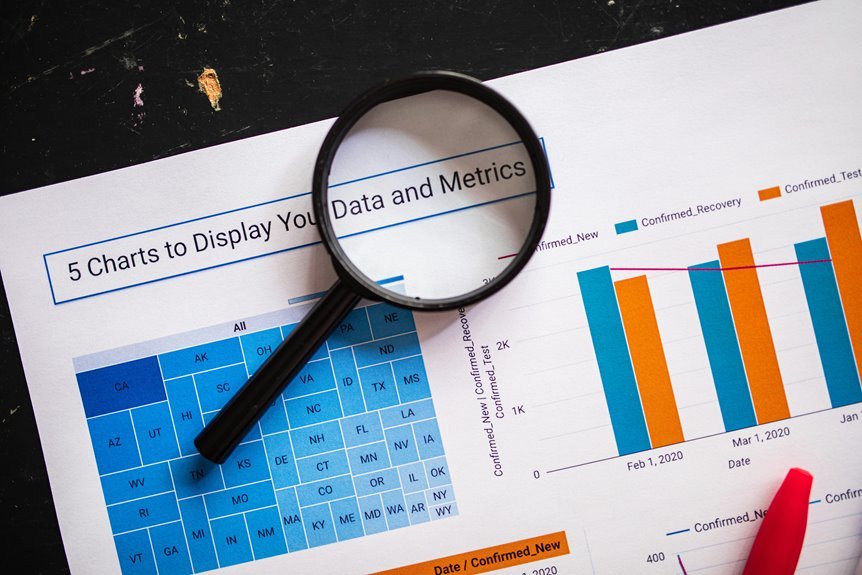
The Business Growth and Industry Analytics Bulletin presents a critical examination of the entities identified by codes 613861920, 4787427582, 21062001, 1603734422, 803001166, and 4197189007. These organizations face increasing pressure to adopt data-driven strategies for sustainable growth. Current trends in industry analytics reveal how advanced methodologies can reshape decision-making processes. Understanding these dynamics is essential for navigating the complexities of today’s competitive market landscape. What innovative approaches will emerge next?
Overview of Key Identifiers and Their Significance
As businesses navigate the complexities of growth, understanding key identifiers becomes crucial for informed decision-making.
Identifier analysis allows organizations to pinpoint essential factors influencing performance.
Significance metrics provide insights into trends and deviations, equipping leaders to adapt strategies effectively.
Current Trends in Industry Analytics
Recent developments in industry analytics highlight a shift towards data-driven decision-making, with organizations increasingly leveraging advanced technologies to enhance their analytical capabilities.
Key trends include the rise of data visualization tools that simplify complex information and the implementation of predictive modeling techniques that forecast trends.
These innovations empower businesses to make informed decisions, fostering agility and adaptability in a rapidly evolving marketplace.
Strategies for Leveraging Data for Business Growth
While many organizations recognize the importance of data in driving business growth, effectively leveraging this resource requires a strategic approach.
Emphasizing data-driven decisions, businesses can utilize predictive modeling to forecast trends and consumer behavior.
Case Studies Highlighting Successful Applications of Analytics
Numerous organizations have successfully harnessed analytics to drive significant improvements in their operations and outcomes.
For instance, companies utilizing predictive modeling can forecast trends, enhancing decision-making efficiency. Furthermore, effective customer segmentation enables targeted marketing strategies, resulting in increased engagement and conversion rates.
These case studies illustrate how analytics not only optimizes performance but also fosters a culture of informed freedom in business practices.
Conclusion
In conclusion, the integration of data-driven strategies is paramount for organizations coded 613861920, 4787427582, 21062001, 1603734422, 803001166, and 4197189007 as they seek to enhance their competitive edge. By effectively leveraging analytics and predictive modeling, these entities can not only forecast market dynamics but also optimize their operations. As the landscape continues to evolve, one must ponder: how will the relentless pursuit of data-driven insights shape the future of business growth?